

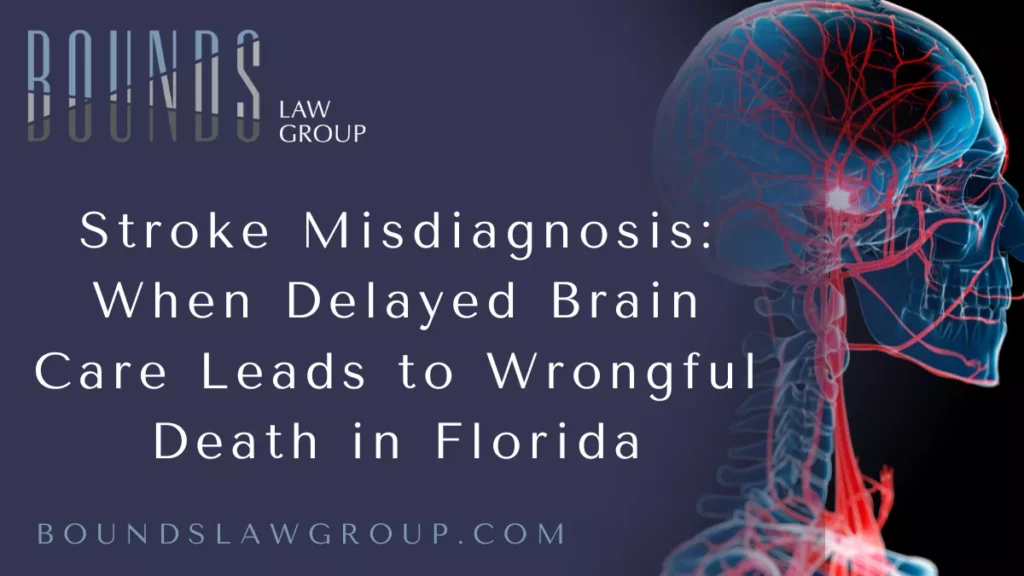
A stroke is a true medical emergency. When blood flow to the brain is interrupted, brain cells begin to die within minutes. Immediate diagnosis and treatment can mean the difference between full recovery, permanent disability, or death. Tragically, strokes are frequently misdiagnosed or treated too late, depriving patients of lifesaving care.
A failure to diagnose or promptly treat a stroke is one of the most dangerous forms of medical malpractice. When delayed or improper care results in a preventable death, Florida law allows surviving family members to pursue a wrongful death medical malpractice claim.
At Bounds Law Group, we help families uncover how stroke warning signs were missed and hold negligent healthcare providers accountable. If you believe a stroke misdiagnosis caused a wrongful death, complete our free case evaluation form or call 877-644-5122 today.
Why Stroke Diagnosis Is So Time-Sensitive
Strokes are often described by the phrase “time is brain.” Every minute without treatment can result in the loss of millions of brain cells.
Prompt diagnosis allows doctors to:
- Administer clot-busting drugs (tPA)
- Perform mechanical thrombectomy
- Control bleeding
- Reduce brain swelling
- Prevent permanent brain damage
When diagnosis is delayed, these life-saving options may no longer be available.
Types of Strokes That Are Commonly Missed
Ischemic Stroke
Caused by a blood clot blocking blood flow to the brain. This is the most common type of stroke and often treatable if identified quickly.
Hemorrhagic Stroke
Occurs when a blood vessel ruptures, causing bleeding in the brain. Rapid imaging and intervention are critical.
Transient Ischemic Attack (TIA)
Often called a “mini-stroke,” TIAs are warning signs of an impending major stroke. Failure to treat TIAs often leads to fatal outcomes.
Common Stroke Symptoms That Are Misdiagnosed
Stroke symptoms may be mistaken for less serious conditions, especially when they appear suddenly. Warning signs include:
- Facial drooping
- Arm or leg weakness
- Slurred or garbled speech
- Confusion or altered mental state
- Vision problems
- Severe headache
- Dizziness or loss of balance
- Nausea or vomiting
Symptoms may come and go, causing providers to dismiss them as anxiety, vertigo, intoxication, or migraines.

How Stroke Misdiagnosis Leads to Wrongful Death
Stroke-related wrongful death cases often involve:
Failure to Order Emergency Imaging
CT scans or MRIs are essential. Delays or failure to order imaging can be fatal.
Misinterpretation of Imaging
Radiologists or physicians may misread scans, missing signs of stroke.
Delayed Administration of tPA
Clot-busting medication must be given within a narrow window. Delays eliminate this option.
Failure to Admit or Monitor
Patients may be discharged instead of admitted for observation.
Ignoring Transient Symptoms
Providers may ignore TIAs or brief neurological symptoms that precede a major stroke.
Failure to Transfer to a Stroke Center
Some hospitals lack stroke capabilities and must transfer patients immediately.
High-Risk Patients Who Require Heightened Stroke Vigilance
Healthcare providers must be especially alert when treating patients with:
- High blood pressure
- Diabetes
- Atrial fibrillation
- High cholesterol
- Smoking history
- Previous stroke or TIA
- Advanced age
- Recent surgery
Failure to consider these risk factors may constitute medical negligence.
When Stroke Misdiagnosis Is Medical Malpractice
A stroke-related death may qualify as malpractice when:
- The provider owed a duty of care
- Stroke symptoms were not properly evaluated
- Diagnostic or treatment delays fell below medical standards
- The delay caused or contributed to death
Expert testimony from neurologists and emergency medicine specialists is typically required.
Who Can Be Held Liable for Fatal Stroke Errors?
Liable parties may include:
- Emergency room physicians
- Neurologists
- Hospitalists
- Radiologists
- Nurses
- Urgent care providers
- Hospitals and healthcare systems
Hospitals may also be liable for failing to maintain proper stroke protocols or staffing.
Wrongful Death Claims for Stroke Negligence in Florida
Under Florida law, wrongful death claims must be filed by the personal representative of the deceased’s estate on behalf of eligible survivors, which may include:
- A surviving spouse
- Children (subject to medical malpractice limitations)
- Parents
- Financial dependents
Florida medical malpractice claims are subject to strict filing deadlines and pre-suit requirements.
Damages Available in Stroke Wrongful Death Cases
Surviving family members may be entitled to compensation for:
Economic Damages
- Emergency and hospital medical expenses
- Rehabilitation costs
- Funeral and burial expenses
- Loss of income and financial support
Non-Economic Damages
- Mental pain and suffering
- Loss of companionship and protection
- Loss of parental guidance
Estate Damages
- Lost earnings
- Loss of future net accumulations
Bounds Law Group works with experts to ensure full valuation of your claim.
How Bounds Law Group Investigates Stroke Wrongful Death Cases
Our approach is detailed and evidence-focused:
1. Medical Record Review
We examine ER notes, neurological exams, imaging reports, and timelines.
2. Imaging and Diagnostic Review
Experts analyze CT scans and MRIs to determine if signs were missed.
3. Timeline Reconstruction
We identify when symptoms began and when treatment should have occurred.
4. Expert Neurological Review
Specialists determine whether earlier treatment would likely have saved the patient.
5. Protocol Evaluation
We review whether stroke-alert and transfer protocols were followed.
Warning Signs of a Fatal Stroke Misdiagnosis
Families often notice red flags such as:
- ER visits shortly before death
- Neurological symptoms dismissed as anxiety or vertigo
- Discharge despite obvious stroke signs
- Sudden deterioration after being sent home
- Conflicting explanations from providers
If your loved one sought care but did not receive timely treatment, the death may have been preventable.
What to Do If You Suspect Stroke Negligence Caused a Loved One’s Death
Take immediate steps:
- Request all medical records and imaging
- Document symptoms and timelines
- Preserve discharge instructions
- Avoid discussing the case with providers without legal counsel
- Contact Bounds Law Group promptly
Florida law strictly limits how long families have to pursue claims.
Why Families Trust Bounds Law Group
Stroke misdiagnosis cases demand urgency, expertise, and persistence. Families choose us because:
- We focus exclusively on medical malpractice
- We understand stroke diagnosis and treatment standards
- We work with leading neurology experts
- We uncover delays hospitals often deny
- We fight for accountability and justice
- We support families with compassion and clarity
Your loved one deserved immediate, lifesaving stroke care. When that care was denied, we help families seek justice.
Contact Bounds Law Group Today
If your loved one died because a stroke was misdiagnosed or treated too late, you may have legal options. Our Florida medical malpractice attorneys are ready to help you pursue justice.
Complete our free case evaluation form or call 877-644-5122 now.
Sources
- Centers for Disease Control and Prevention – Stroke Facts
https://www.cdc.gov/stroke - American Stroke Association – Stroke Warning Signs and Treatment
https://www.stroke.org - National Library of Medicine – Stroke Misdiagnosis and Mortality
https://pubmed.ncbi.nlm.nih.gov - Florida Statutes – Wrongful Death Act
https://www.leg.state.fl.us/statutes